Glass Door Repair: Common Problems And When To Call A Glazier In Nambucca Heads
The first question most people ask after a glass door breaks is whether it can be repaired or whether the whole panel needs replacing. The honest answer depends on which part failed — the glass or the frame — and what type of glass is in the door. This guide works through the most common glass door repair scenarios and what to do right now if the glass has already gone.
Can A Glass Door Be Repaired, Or Does It Need Replacing?
Annealed (standard) glass can be left temporarily if the crack is small, but there is no way to repair cracked glass — it needs replacing.
Toughened safety glass — required in all residential door panels under Australian standards — cannot be repaired at all. Once it breaks, it shatters into hundreds of small pieces and the panel must be replaced. There is no intermediate option.
Whether the glass panel alone needs replacing, or whether the frame needs attention too, is often the more important question.
What Are The Most Common Glass Door Problems?
From jobs attended across the Mid North Coast, glass door problems fall into a few consistent categories:
- Shattered toughened panels requiring full replacement — the result of impact, edge damage or a frame that has put stress on the glass over time
- Sliding doors that stick or drag — usually a roller or track problem, not a glass problem, but doors forced when they stick are a common cause of eventual panel cracking
- Loose or rattling panels from glazing beads that have worked loose or seals that have deteriorated
- Foggy or condensation-filled panels in double glazing — the sealed unit has failed and needs replacement
Why Did My Sliding Glass Door Shatter On Its Own?
Spontaneous breakage in toughened glass has two main causes. The first is edge damage — a chip or nick on the edge of the panel, often from the door being slammed against the track stop repeatedly over years. Edge damage creates a stress point that eventually triggers failure without any external impact.
The second cause is nickel sulphide inclusions — microscopic impurities in the glass that expand over time and cause the panel to break without warning. This is a known characteristic of toughened glass.
A third factor specific to coastal properties: a
racked or warped frame puts uneven stress on the panel. On the Mid North Coast, salt air corrodes sliding door hardware over time — rollers, tracks and locks seize faster near the water. A frame that has twisted slightly out of square carries a stress load the panel was not designed for.
Glass Or Frame — Which One Actually Failed?
This diagnostic question determines whether glass replacement alone fixes the problem.
Signs the glass is the only problem:
- The frame runs square with no visible twist
- Rollers and track are in reasonable condition
- The door slides or swings without binding
- The glass failed due to a clear impact or edge damage
In this case, replacing the glass panel alone is the sensible, more economical fix.
Signs the frame is contributing:
- The door has been sticking or dragging before the glass broke
- Rollers are seized or corroded
- The frame is visibly racked or the track is bent
- Aluminium components show significant salt-air corrosion
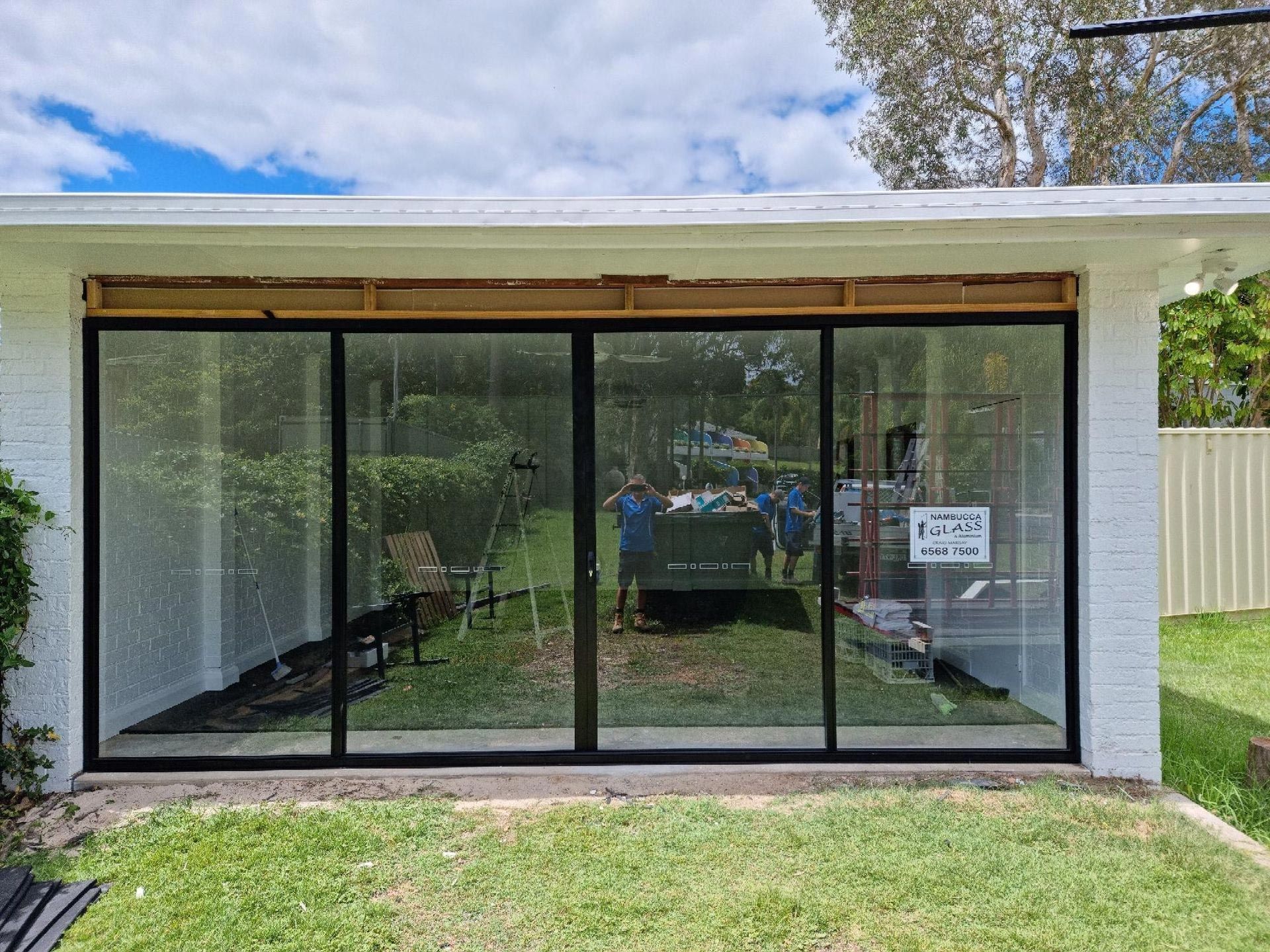
Re-glazing a panel into a frame with failing hardware is money wasted — the new panel will be under the same stress as the old one. Where the frame is beyond adjustment, replacing the unit with new
aluminium doors is usually the better long-term spend. A glazier can make this call on site.
What Happens When A Glazier Attends?
The first step is always a measure. Door glass panels are made to measure — there is no standard size that fits every door, and the thickness, edge work and tempering requirements need to be confirmed for the specific opening. This is why a firm price cannot be given over the phone.
At the visit, the glazier assesses the frame and hardware, measures the opening precisely, confirms the glass specification, and advises on any frame or hardware work needed before the panel is fitted.
Nambucca Glass holds stock at the workshop on Monro Street, which reduces turnaround time compared to freighting a panel from a metro supplier. The timeline is: measure, then fabricate or source the panel, then return to install.
Door panels are almost always toughened safety glass, which is why DIY attempts go wrong — we cover the
importance of hiring a professional for glass repair in more detail, including the injury risks of handling toughened panels without the right equipment.
What To Do Right Now If Your Door Glass Has Broken
- Keep people and pets away — toughened glass dice are small but cut on bare feet
- Do not sweep barefoot — wear shoes before approaching the glass
- Do not attempt to hold the panel with tape — toughened glass that has shattered cannot be secured this way
- Board or cordon the opening if the door cannot be closed securely — a sheet of plywood fixed temporarily is safer than a compromised door
- Do not attempt to remove the remaining glass yourself — glazing beads and toughened glass removal require specific tools and carry injury risk
If you are unsure whether the damage is urgent, send a photo and the team can advise.
FAQs
Book A Glass Door Repair On The Mid North Coast
Whether it is a shattered sliding door, a cracked hinged panel or a bi-fold that has come off its track, our glass repair Nambucca Heads team covers the full range of glass door repair and replacement across Nambucca Heads, Macksville, Urunga, Sawtell and South West Rocks.
Send a photo of the damage for an initial assessment, or contact us to book a measure and quote. If you are still weighing up whether your damage warrants repair or replacement, our guide on how to know if your glass needs repair or replacement covers the signs to look for.